Madre Hambre, otherwise known as Hungry Mother04.16.09
 I celebrated my Easter weekend not with a feast of dyed eggs and glazed ham, but succulent mussels from Northern Maine. Even though they were a far cry from the Spanish-styled garlic-sizzled version that I devoured on Sundays at La Casa de España, a local enclave run and frequented by the Spanish community in Santo Domingo, they were the basis of an unforgettable dish I found deep in the dark streets of Cambridge.
It was an unusually chilly April night in a college town known for its carefree youth; yet inside the sophisticated-country-themed Hungry Mother, my dish was serious business. On the plate, the shells were shiny black cocktail dresses that covered silky, fleshy treasures peeking coyly at me. They bobbed in a delicate broth prepared with strips of tasso ham, green onion confetti, toasted breadcrumbs and a collection of Louisiana spices that left a dash of heat on your tongue.
I lifted each mussel from its shell, brought it to my lips and popped its sweet brininess in my mouth. Tearing off a small piece of homemade country bread, I began a ritual during that memorable meal of soaking up the fragrant broth between each muscled mouthful. Pure bliss.
Take a look at the great stuff these guys are creating in this Cambridge kitchen, and check out their eclectic menu here:
Habichuelas Dulce04.08.09
As a native from the Dominican Republic, I’ve always been familiar with the spirit of survival that lies deep in the heart of every fellow Dominican, especially those who have chosen to leave the motherland and buscársela in the U.S., in search of a better life. But it wasn’t until recently that I discovered that Dominicans are so much more than fun-loving merengue-dancing people; their hard-working entrepreneurial spirit is confirmed on the sidewalks of uptown Manhattan, in Washington Heights.
It is Saturday afternoon and the Dominican Mecca of Washington Heights is buzzing with commercial activity and dizzying sounds of frantic merengue music.
Caridad Gonzalez, 51, a street food vendor has tapped into her entrepreneurial spirit to make a life for herself and her 16-year old daughter. She doesn’t sell the ubiquitous briny hotdog and limp pretzel you find throughout Manhattan, but a selection of Dominican desserts that can seduce the most conventional of palates.
Stationed between an ice-cone cart and a table piled high with plastic jewelry on 181st street and St. Nicholas Avenue, Mrs. Gonzalez stands behind two water coolers filled with sweet, creamy treasures from her kitchen: habichuelas con dulce or sweet creamed beans is a Dominican dessert traditionally prepared during Easter season, which she sells throughout the entire year. Chaca, a thick corn drink known in other parts of Latin America as atole and mazamorra, is the other best seller.
As she ladles the rich warm concoctions into paper cups that she sells for $1, she recounts how she first started preparing these recipes for another vendor up the street from her called Nena La Rubia. She went on her own in 2003.
“I learned to make habichuelas with my mom back home and finished learning all I needed to know with Nena,” she says in Spanish.
For the past five years, she’s risen at 5 a.m. and prepares her dishes until 10 a.m. in her home kitchen five blocks away. In describing the cooking process, she tries to use only the best ingredients she can find. “I use Carnation milk,” she says proudly, pointing to an empty can of evaporated milk in a plastic bag behind her. She says it’s the Carnation milk that makes everything taste so good and that people like her desserts because it gives them energy. Other ingredients in her habichuelas include whole milk, red beans, cinnamon, nutmeg, sweet potato, and round milk cookies of the Dominican Guarina brand.
Every day she sets up her cart and has Cecilia Ureña, her 50-something friend, help her out until 2 p.m. She then returns to her cart and works until 8 p.m. “I work hard, real hard,” she says. “My parents taught me to work from when I was little.”
Caridad Gonzalez arrived in New York 18 years ago from the Dominican Republic. Little did she know she would end up cooking for her life. With seven kids back in the Dominican Republic, she tries to visit them whenever she can. “One is a college graduate,” she says, beaming. ”None of them has ever given me any trouble.”
She also has a teenage daughter named Karina who will soon graduate from high school.
According to Mrs. Gonzalez, the neighborhood has changed significantly throughout the past five years. “There are a lot more people, a lot more vendors,” she says. Most of her earnings come from her habichuelas, which are her most popular item. Aside from the $1 cups, she also sells small containers of habichuelas and majarete, a soft corn pudding she makes from scratch, for $2 and large containers for $5.
Although her spirit has been bent but not broken, and her stern face softens only when she speaks of her daughter, her desserts, especially her habichuelas are one of the best in the neighborhood.
She says that aside from all of the Dominicans who live in the area, there’s a large Jewish community in the neighborhood. “They pass by here but they never buy anything.”
Feeling bold in the kitchen? Find the recipe at:
http://www.nydailynews.com/latino/2008/03/19/2008-03-19_spilling_the_beans_on_a_dominican_treasu.html
A Taste of Passion04.02.09
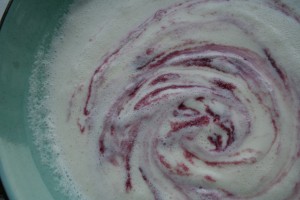 Passiflora edulis in Latin, Chinola in Dominican, Maracujá in Portuguese. It’s a wonder that the unique passion fruit has so many identities, although its essence remains the same: tangy, sweet, pulpy and dotted with seeds, which can make it a challenge to eat, but in its different manifestations, becomes a pleasure. Its pungent fragrance reminds me of lazy summers in the D.R.. Tall icy glasses of its juice would wait for me as I came in from playing in the yard, sweaty and giddy and craving refreshment. As colorful as America’s beloved Sunny D, my Chinola juice would quench my thirst with its bright and summery punch.
I found it once again years later and miles away from home, on a trip to Brazil. Actually, it found me; mixed with the local cachaca to create an exotic version of the caipirinha. It became our signature drink, setting the stage many evenings, with a memorable one spent at a local posada where we indulged in a banquet of local dishes laid out over banana leaves in the middle of the rain forest. It paired exquisitely with the coconut-spiked moquecas and spicy chicken stews, luring us into a happy buoyant surreality until the sun and moon both shared the sky.
Then, once again, a few weekends ago, it reappeared. Here on the 22nd floor of a New York City apartment. It lit up our evening and arrived at our party dressed as a mousse. It was silky luscious creamy and evoked the scent of somewhere lush and warm, which, along with the jokes and friendly chatter, it comforted us from the city’s gray cold.
So I bring you today, in an ode to passion, a quick and easy rendition of passionfruit mousse.
Ingredients:
1 can of condensed milk
1 can of “creme de leite”
80% of the same can measurement of passion fruit juice
Blend and place in a bowl. Refrigerate for 3 hours or until firm. Garnish with mint leaves or some fruit syrup.
Postcards from Banana Island03.26.09
Con los pájaros
Hoy concluímos nuestro primer día en Santa Lucia. Después de desayunarr con los pajaritos, disfrutamos del spa que nos quedaba a un minuto de nuestra villa. La habitación, que terminó siendo una villa porque tenía cuarto, sala y cocinita estaba bien cuchi pero tan encrustada en la montaña que desde el balcón la vista era puro arbol. (Anoche había un pájaro loco que se paso la noche entera cantando. Gracias a Dios, que como buena NuYorqueña tenía conmigo unos tapones de oídos, los cuales muy bien usé.) Esta mañana hable con la recepción y les pregunté a ver si habia algo más cerca del mar. Mientras tanto, nos dirigimos hacia la playa y allí comimos algo y luego fuimos a pasear en kayak por la bahía Labrelotte, donde está el hotel WindJammers. Cuando llegamos nos avisaron que podíamos cambiar de habitación para poder ver el amanecer y tener vista hacia el mar. Fuimos a empacar y luego tomamos una guaguita que nos trajo a la nueva habitación. Aquí uno depende mucho de estas guaguitas porque como el hotel esta construído en la montaña todo es super empinado. Anyways, nos fuimos a nadar en una de las piscinas del hotel. Desde adentro del agua la vista era increíble–con la bahia plateada y las montañas verdes a sus lados–empezó a llover y el sol brillaba entre las nubes. Ahora nos vamos a cenar a uno de los restaurantes del hotel y tienen musica en vivo y un come-fuego, malabarista, etc..
En la selva
Anoche visitamos un lugar muy especial, se llama Rainforest Hideaway y es un restaurante en la Bahía de Marigot. Para llegar allá, la vuelta en taxi tomo 40 minutos y nos fuimos con nuestro amigo Desmond, el señor que nos recogió en el aeropuerto. Cuando llegamos a la bahía tomamos un “ferry” que al final termino siendo un yola con motor que nos llevó al otro lado de la bahía donde se encontraba el restaurante. El lugar ha sido construído entre la selva pero el comedor queda en un muelle que se extiende sobre la bahia, al estilo de Neptuno(en Boca Chica) pero un poquito mas elegante. El menú consistió de mariscos, con un suflé de scallops con beignets de cangrejo, salmón y guineos flambeados con ron acompañado de helado de vainilla. Los guineos aquí son exquisitos con un ligero sabor a clavo dulce. Son la especialidad de isla ya que por todos lados hay cosechas de guineos. Durante el día nos fuimos a explorar la selva y en nuestro camino paramos a saborear estos famosos guineos, además de coco fresco, toronja y naranja. Concluímos la aventura con un baño frio en una cascada, pura terapia natural.
Por la costa
Ayer pasamos el dia en barco, navegando las aguas tropicales del caribe sanluciano. Nos dirigimos hacia el sur, parando en otra de sus selvas y refrescandonos en otra de sus cascadas mágicas. Yo pienso que estas cascadas deben tener algún poder extraordinario porque al salir de allí nos sentimos extremadamente tranquilos, casi adormecidos, no se si fue el chorro de agua fría estirando los nervios o la presión del agua que bajaba desde su boca situada a unos 200 pies de altura. De todos modos, al salir de allí nos montamos en un pequeño autobús que nos llevó al pueblo Soufriere (sulfur en francés) situado en la caldera de uno de los volcanes de la isla. Este sigue activo y produciendo gases sulfúricos que huelen a huevo podrido-¡que rico! Luego, seguimos subiendo la montaña hasta llegar a la plantación de cacao Fond Doux, donde nos explicaron como se cultiva la semilla de cacao, la cual se saca de su fruta, se seca al sol y se muele con los pies (similar al proceso de aplastar uvas de vino). Allí, almorzamos un pollo guisado muy tierno y suculento, pie de lechosa verde, arroz con hierbas y ensalada. Volvimos a abordar el catamarán que nos pasó por los picos mas altos de la isla-Gros Piton y Petit Piton- que se encuentran a mas de 3,000 pies de altura. De camino hacia el hotel, nos dimos un baño de mar desembarcando en otra bahía de la isla, finalmente regresamos cansados y felices.
Hoy nos pasamos el dia tirados en la arena, disfrutamos de un heladito de ron con pasas bajo el sol de la tarde y luego nos preparamos para salir a cenar en el pueblo de Castries.
Bananas on your burger?03.20.09
 I have a new found appreciation for bananas. The miracle fruit, as it is sometimes referred to for its valuable nutritious content, found its way into my heart on a recent escape to St.Lucia. This island on the West Indies with a population of about 150,000 is drenched in English, French and African hues, and resulted in a surprising discovery. Geographically, it combined the lush terrain of the Brazilian Amazon with emerald beaches. Driving along its curvy roads, banana plantations stretched along the way, its tiers covered in blue plastic for protection from the sun and insects.
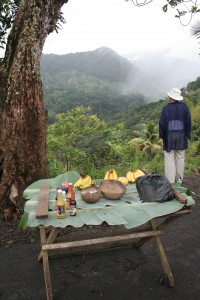
Bananas are one of the island’s main crops and along with tourism, one of its primary sources of revenue. And understandably so, each St.Lucian banana is a sunny gem of nature that’s honey sweet and spiced with cloves. They were a ubiquitous snack, sprawled on a roadside stand by the jungle and on a boat that took me sailing along the island’s coasts.
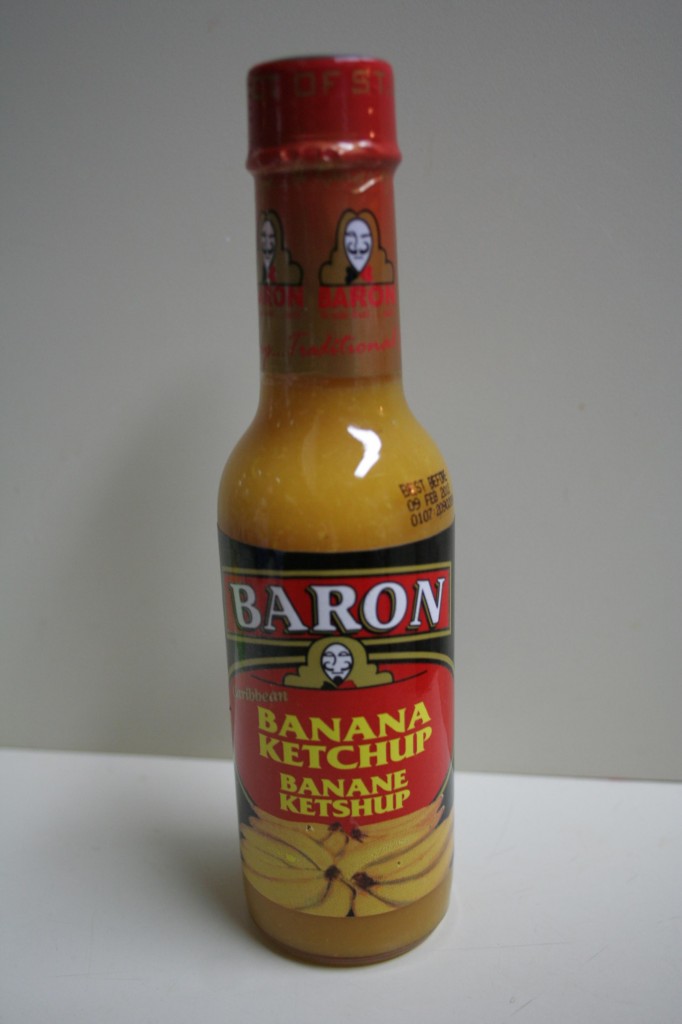
Cramming my suitcase full of them would have brightened up my kitchen in New York for days to come. But instead I opted for the next best thing: banana ketchup. Locals use it like our beloved Heinz and smear it on their burgers and fries.Yellow, tangy and mildly sweet but infused with an authentic banana essence, it is the sunniest condiment in my pantry to date.
Sunflower Tart03.18.09
Maybe it’s Spring, that finally showed its face today. Maybe it’s the citrus craze with all its shiny brightness that brings relief during these last few days of Winter. Whatever it is that made me do it, I tasted the Luscious Lemon Tart (available at your neighborhood Starbucks) a few days ago. It was a promising bridge into the season. And really versatile. Pair it with a cup of earl gray on a rainy day, or pack it as dessert for a picnic in the sun.
The tart was tangy and tart, with a subtle lemony flavor that said hi in a very gentle way. The bright flavor of the lemon custard, sticky and spongy, married the buttery sweetness of its crust. The crust reminded me of all those Royal Dansk cookies I used to devour as a kid. Like a sunflower, it’ll pick you up.
A Wink to Spring03.13.09
After making a resolution of eating more greens this year, I’ve begun incorporating more fresh produce into my day to day. Until recently, I would shy away from natural juices, especially those made at those funky smelling health food stores that I used to walk into to pick up a bottle of vitamin C. However, after hearing about the benefits of these juices by friends and family, I’ve started drinking a Green juice from my neighborhood health food store. It’s a bright concoction of celery, parsley, kale, spinach and cucumber, and in basic terms a salad in a glass. As I waited for my juice one afternoon, a curious bystander said it “smelled like summer.” It’s more like freshly cut grass, but in any case it’s a refreshing tribute to what awaits us in the Spring: sweet asparagus, tender artichokes and plump peas.
In the meantime, here’s an idea to get you through the tail end of winter.
Green (poached) eggs and ham 2 servings
5 creamer potatoes
1 green pepper, chopped
1 medium onion, chopped
1 garlic clove, minced
2 slices of prosciutto ham, sliced
White vinegar
4 eggs
Salt
Olive Oil
Boil the potatoes until tender(about 30 minutes). In the meantime, sautée garlic, onion and pepper for about 15 min. or until caramelized. Stir in the ham. When potatoes are tender, remove from pot and slice. Add potatoes to ham mixture.
Fill up a small pot with water, salt the water and when it starts to boil, add a splash of vinegar. Carefully crack open an egg and place into a small bowl. Transfer gently into the boiling water. Repeat process for all eggs. Cook for 2-3 minutes and remove from water. Drain.
Divide potato mix between two dishes and top with eggs. Drizzle with olive oil and add salt, if desired.
Doritos & Coke02.13.09
Whenever I traveled to the U.S. over summer holidays, there were two tastes that confirmed I had arrived in this country, which back then seemed amazing and strange and wonderful. When landing in Miami, our first stop would always be a car rental office. We loaded our luggage into one of those buses with the alley in the middle and sat in anticipation. There was just the four of us: my parents, my twin and I, so we always found room. There was always so much anticipation-I remember looking out into the street through the tinted windows of the bus and being enthralled by all the traffic, the chaos and the order.
When we arrived at the rental office, while the parents decided on a car, which would usually be a Buick or Chrysler or some other staple of Americana, we would beeline straight to the vending machine to get the first taste of our trip. Doritos and a Coke. We would indulge in it shamelessly, coloring our fingers orange and taking desperate swigs of the cold fizzy drink. They were perfect for each other.
This combination is a good example of returning to the simple things in life, or Obamanation’s encouraging Back to Basics mentality as a practical approach to the hiccups of the day.


Food For Thought